The Financial Architecture of a Bali Yacht Charter
Before examining specific vessel types, it is critical to understand the two core components of any charter agreement. The base charter fee constitutes the cost of hiring the yacht and its crew for a specified period. The second component is the Advanced Provisioning Allowance, or APA — a standard industry practice, representing a deposit, typically 30-35% of the base charter fee, used to cover variable expenses accrued during your charter. These include fuel, food, beverages, port fees, and any specific requests.
For a charter with a base rate of $100,000 USD, an APA of $30,000 would be collected. The captain maintains a running tally of all expenditures, which is available for review at any time. Any unspent funds are returned to the client at the conclusion of the charter. Conversely, if expenses exceed the APA, the difference is settled prior to disembarkation. This system ensures a bespoke experience, tailored precisely to your consumption and preferences.
The Superyacht Proposition: Uncompromising Scale and Service
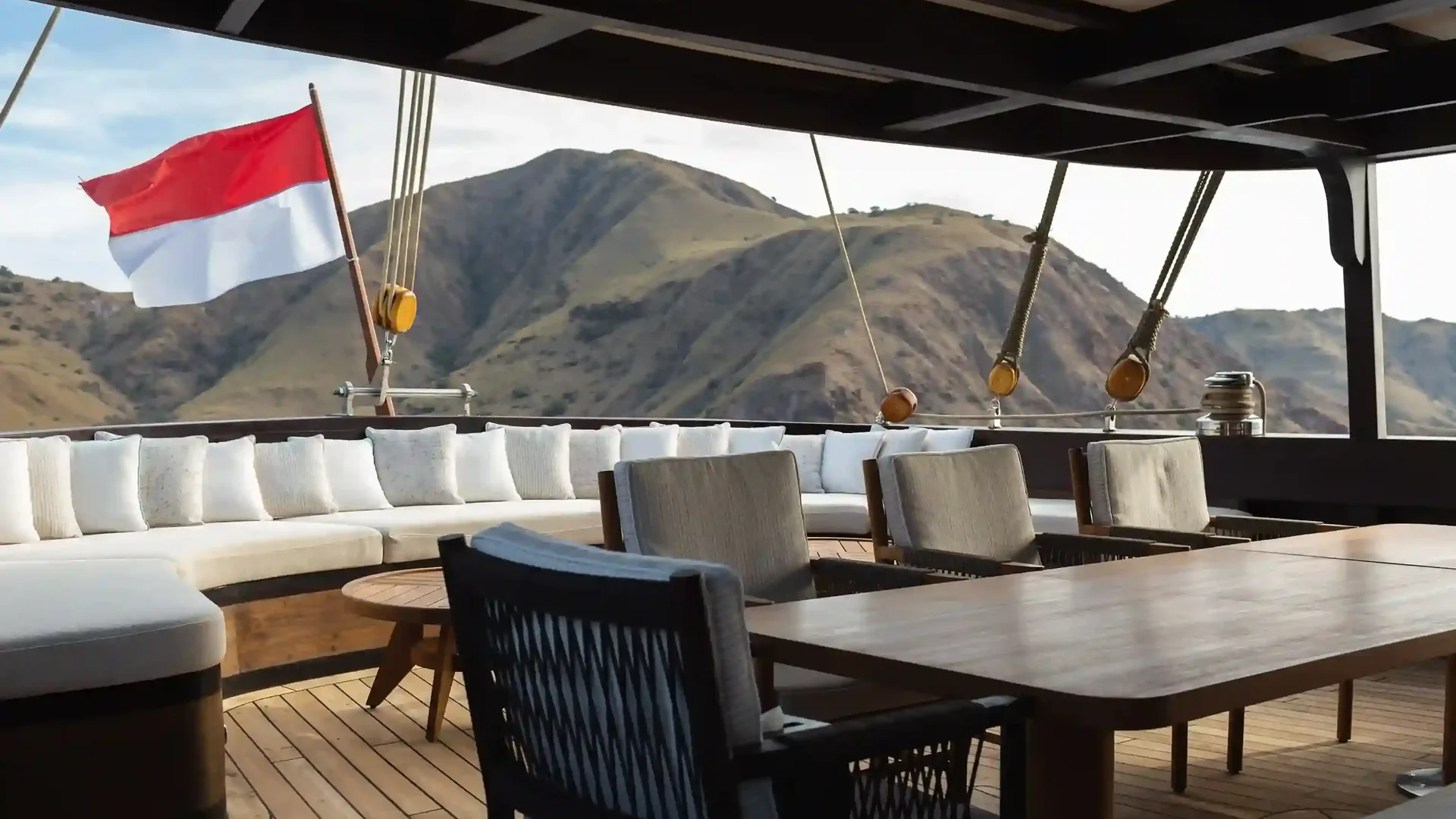
In the lexicon of naval architecture, a superyacht is formally defined as a professionally crewed vessel with a load line length of 24 meters and above. In practice, the term connotes a vessel of significant volume and capability, designed for extended voyages with an exceptional level of service. This is the platform for multi-week expeditions to Komodo National Park, Raja Ampat, or the Spice Islands.
Weekly base charter rates for superyachts operating out of Bali begin around $85,000 USD and can exceed $500,000 USD for the largest and most sought-after vessels during the peak season (June through September). Consider a vessel like the 55-meter M/Y Oceanus: with a crew of 12 for 12 guests, its charter rate starts at $180,000 USD per week, plus APA. This cost secures not just six palatial staterooms, but a dedicated onboard spa with a certified therapist, a professional dive center with a PADI-certified divemaster, a Cordon Bleu-trained executive chef and a dedicated pastry chef, an extensive water-toy inventory, and stabilization systems both at anchor and underway.
What the premium actually buys
On a superyacht the objective is complete self-sufficiency and five-star service in the most remote locations on Earth: fuel tanks holding over 100,000 litres, freezers provisioned for a month. The cost reflects a capability that a smaller vessel simply cannot offer. A charter of this magnitude is a logistical operation, planned months in advance to secure provisions and permits for sensitive marine parks like Komodo, where mooring fees can reach up to $250 USD per day.
Motor Yacht Charters: Agility and Executive Access
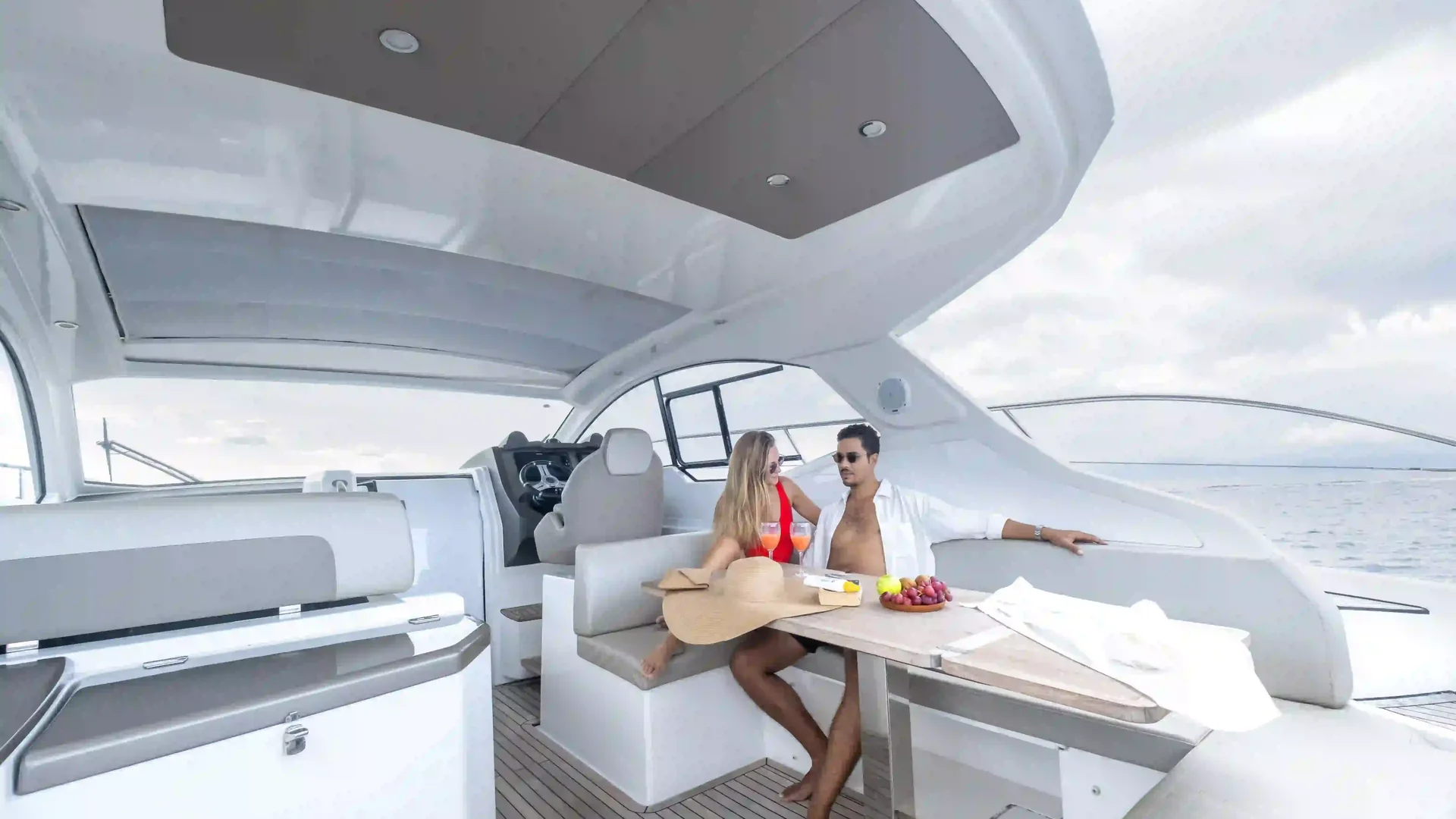
The motor yacht category, typically spanning 15 to 24 meters, represents the most popular segment for a bali luxury yacht experience focused on day trips or shorter, multi-day excursions. These vessels offer a compelling blend of speed, luxury, and access, capable of reaching the shores of Nusa Penida from Benoa Harbor in under an hour. They are ideal for corporate entertainment, intimate family outings, or as a platform for a sunset cruise along the Seminyak coastline.
Pricing is more accessible. Day charters, typically 8 hours, range from $6,000 USD to $15,000 USD, while weekly rates often fall between $30,000 and $70,000 USD, plus APA. The primary cost drivers are the yacht’s length, brand prestige (Sunseeker, Princess, Azimut), age, and the level of recent refurbishment. Speed is a key factor; a faster cruise speed means more destinations can be reached in a day, but it also translates directly to higher fuel consumption. A 22-meter Sunseeker cruising at 25 knots will consume approximately 400 liters of fuel per hour.
Choosing a motor yacht is about defining the mission
For a high-impact corporate event, a larger, more voluminous yacht like the Azimut provides ample space for entertainment. For a family seeking a comfortable day of swimming and snorkeling at Crystal Bay, the Princess offers an efficient and elegant solution. A bali yacht hire in this category offers significant flexibility.
The Catamaran Advantage: Stability and Intimate Exploration
Sailing and power catamarans offer a distinct proposition, prized for stability, fuel efficiency, and a shallow draft. Their twin-hull design provides a wide, stable platform with minimal roll, both at anchor and underway — a significant benefit for guests susceptible to motion sickness. This stability, combined with expansive deck and interior space, makes catamarans a preferred choice for families and relaxed group charters.
A modern, crewed sailing catamaran between 15 and 20 meters typically charters for $15,000 to $40,000 USD per week, plus APA. Their shallow draft, often less than 1.5 meters, allows them to access secluded coves and anchorages off the Gili Islands or along the southern coast of Lombok that are inaccessible to deeper-draft monohull yachts.
Fuel efficiency is another key advantage
While a power catamaran will still consume considerable fuel, a sailing catamaran can leverage wind power, drastically reducing APA expenses on longer passages. The experience is more connected to the elements, focused on the journey itself. A day sail from Serangan to a quiet anchorage off Nusa Lembongan might consume less than 100 liters of diesel, a fraction of what a comparable motor yacht would require.